In food production and warehousing, waiting until you see a pest is too late. By the time one appears, there may already be a hidden infestation. Here are five subtle signs that could indicate pests are already inside your facility:
1. Unexplained Damage to Packaging or Stock
Gnaw marks, torn wrapping, or punctured bags may not be accidental. Rodents, insects, and birds can all damage packaging, even if you haven’t spotted them directly. Any damaged to storage containers or packaging needs investigating. Making sure stock arrives in good condition is crucial to noticing if there are changes when routine inspections or racking are done.
2. Droppings or Shed Skins
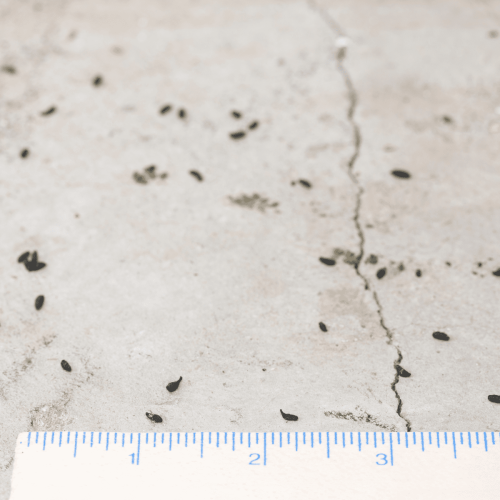
Rodents and insects leave behind droppings or shed skins as they move and grow. Each pest has a distinct type of evidence. Learn to recognise the difference between mouse droppings, rat capsules, and beetle dust.
Above we have an example of mouse droppings which are small, cyndrical and are about the size of grains of rice. Rat droppings are larger and have blunt ends, not the pointed ones we see in the mouse droppings above. Mouses defacate as they move so they are also spread out over an area. Cockroach droppings, for instance, would be concentrated in one spot.
3. Strange Smells in Storage or Waste Areas
A musky, oily, or sweet decomposing smell in certain areas can indicate rodent urine, cockroach infestations, or dead pests. These odours often build up in hidden corners, under pallets, or in ceiling voids.
Often smells can be left for long periods of time because employees get used to it or attribute it to something incorrectly. Any odd smell needs investigating and pest activity ruling out.
4. Noises After Hours
Scratching, rustling, or squeaking sounds coming from the ceiling or walls may be rodents nesting. If the building is quiet and you can hear movement, take it seriously. Many pests take advantage of the cover of darkness to be active. They will scurry around looking for food or a better form of shelter. Creatures like rats, mice, cockroaches, spiders and silverfish are nocturnal so you could have a pest problem and never see the culprits first hand.
5. Smear Marks or Webbing
Rodents often leave greasy marks along runways or entry points. Similarly, insects like moths and spiders leave behind silky webbing near infested products. These are possibly the hardest signs to spot but when you know what you are looking for they are vital indicators.
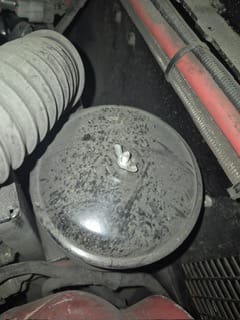
A more obvious indicator would be print marks on dusty surfaces. The easiest thing to look for in this case is unexplained disruption to surfaces. If there is anything out of the ordinary then it warrants exploration by a pest management professional. Like the example below, locating these problems could be exploring places not frequented by staff. Pests like to hide where they will not be discovered. Here we see mice prints in a dusty, disused piece of equipment, parked in a warehouse.
Recognising these early warning signs and reporting them quickly is your best defence against a full-blown infestation. Your pest control provider might visit weekly or monthly. But your team is onsite every single day. That means they’re the most important people in your pest prevention strategy.
Our hub has been in Lincolnshire since we started but we operate throughout the country and some of our advisors see very little of our home county. Here are a few of the places we currently cover with active projects and maintenance contracts: